Chaparral Cactus & Succulents LLC
  • Home
  • Blog
  • Photo Gallery
  • About
  • Care sheets

Schick and johnson hybrid echinopsis care sheet

1/31/2026

0 Comments

 
       Schick and Johnson Hybrid Echinopsis Cactus Care
Schick and Johnson hybrid echinopsis cactus are some of our favorites for their blooms.  As with all plants, they depend on their owners for adequate light, water, nutrition, and temperature.  
1.  Adequate sunlight prevents weak growth.  Direct sunlight in a south or west window, or sunroom, is best within the home.  You can summer them outdoors under a covered patio, lattice, or afternoon shade to protect them from sunburn.  
2.  Temperature within a home or summer patio make for healthy plants.  Being tropical, protect from cold and bring in by mid-fall. 
3.  Adequate watering is essential for growth, especially during the growing season spring, summer, and early fall. Water when dry but not bone dry.  Terracotta pots are best (with a drain hole) and a fast drain soil mix.  Watering should reach the bottom of the pot and be allowed to drain off.
4.  Less watering in winter, during the shorter days of the year, helps echinopsis rest to ready them for next seasons blooms.  Run dry longer in winter and increase water starting in spring. 
5.  Fertilize echinopsis monthly, spring to early fall, using 20-20-20 or Miracle Gro Tomato Fertilizer, which is a good alternative for cactus fertilizer. There are also available name brand cactus fertilizers on the market and follow their label instructions.  Osmocote Indoor/Outdoor Time Release Fertilizer may also be applied.  Re-pot your echinopsis every one to two years with a larger size pot to allow for more growth.
By Val Cathey

0 Comments

Tropical cactus and succulent Care sheet

1/31/2026

1 Comment

 
Cactus and succulents, as all plants, depend on their owners for adequate light, temperature, water, and nutrition.

Adequate sunlight promotes healthy growth. For most succulents, the best sunlight comes from a south, west, or east window. Cactus prefer south or west windows. Jungle cactus (epiphytic plants, which often grow in trees) prefer strong indirect light or morning sun from an east window.
Knowing your plants origin will help you determine its temperature requirements. In general, avoid prolonged temperatures below 50ºF. Optimal growth usually takes place when temperatures stay around 70ºF –– 85ºF.

Proper watering and good drainage is essential for growth. Therefore, it is best to use pots with a drain hole. A general rule of thumb is to water your plant when the soil is dry or lightly dry to the touch. If the soil has shrunk away from the sides of the pot, it is too dry. Avoid overwatering, which can cause roots to rot, but water deep enough to hydrate the full root system. Water through to the bottom of the pot but avoid standing water. Cactus and succulents require less water during colder winter months with shorter days and more water during hot summer months with longer days.

Regular fertilizing during the summer months helps keep plants healthy. A balanced water-soluble fertilizer (20-20-20) used once a month coupled with a time release product (Osmocote) enhances the growth of your plants and encourages flowering. Repot your plant every couple of years, or as needed into a slightly larger pot, to refresh the soil and allow for further root growth. 
1 Comment

Echinopsis Calochlora

2/20/2014

0 Comments

 
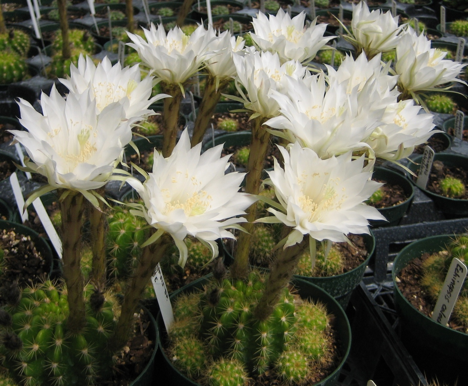
Many beautiful cactus come from South America.  Echinopsis calochlora is native to Brazil.  It's globular body is light, bright green, with golden spines, and fragrant pure white, 4 inch diameter flowers.  This wild echinopsis rivals any hybrid, repeat blooming from late spring to early fall.  The flowers open in the late afternoon, or early evening, and last until the heat of the next day.  These cactus grow easily on a sunny window sill, and can also spend summers in a protected spot outdoors.
Picture
0 Comments

Prickly Pears

2/20/2014

3 Comments

 
Picture
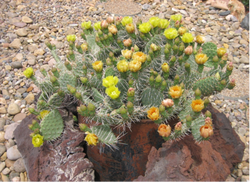
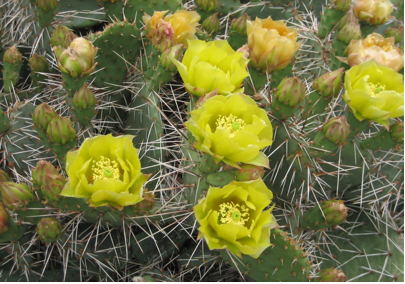
Prickly pears are often considered undesirable plants, and are treated as weeds.  They are commonly found growing in pastures, fields, and scrublands of the Texas panhandle.  Sometimes, they even come up in our yards.  Our two most common varieties are opuntia macrorhiza and opuntia phaecantha.  Opuntia phaecantha's growth is upright, and macrorhiza is lower and sprawling.  They usually have yellow flowers, or yellow with red centers.


Prickly pears are well known for their hooked spines and glochids, which can hurt if you come in contact with them.  Despite their spiny pads, they have a natural beauty and great endurance in our sometimes harsh environment.  They can survive our cold winters, hot summers, and the panhandle's intense afternoon sun.  Their water requirements are less than most cultivated plants.  I planted opuntia macrorhiza, about five years ago, in a large planter, in the middle of our rock garden.  They have bloomed without fail every spring.  Their golden yellow blossoms become attractive red fruits in the fall and winter months.  They need little care.  Water during extended dry spells, and fertilize in the spring and early summer to keep them happy.

Picture
3 Comments

    Author

    Valerie Cathey

    Archives

    January 2026
    February 2014

    Categories

    All
    Cactus
    Echinopsis Calochlora
    Prickly Pear

    RSS Feed

Proudly powered by Weebly